Written by Peter Jacobs
For around ten years, PGA Professional George Hewitt has had a problem with one club in his bag, the driver.
As George put it in our first filmed session:
“I have, for the last probably ten years, struggled with driver.”
As the Head Pro at Brickendon Grange GC, he can teach the shot, he understands the technique and can reproduce it in the studio and range but when out on the course when the pressure mounts he doesn’t trust the driver. He can hit a three wood confidently and has found a way to manage with the use of a mini driver but the extra yardage with the driver can still be costly. He has hit excellent drives when the situation demanded it, but in other situations, simply having the driver in his hands can bring up a completely different response.
“I get it in my hands and it’s like, ‘I just can’t hit this.’”
That is what makes this such an interesting example of the mental side of golf. The ability has not disappeared, but access to it changes depending on the club, the situation and what George expects to happen next.
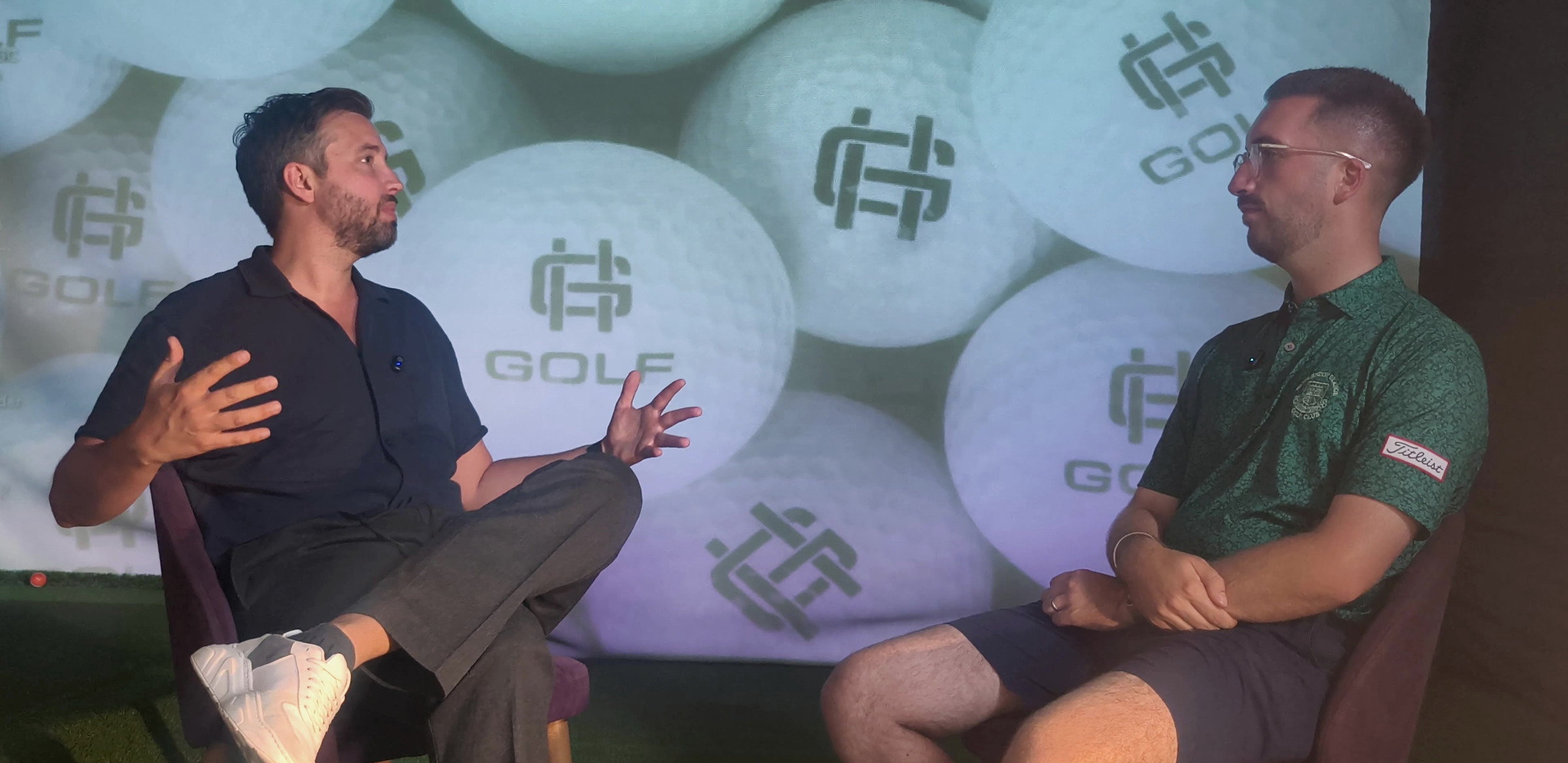
I am working with George across a series of sessions at Brickendon Grange Golf Club. We are documenting the process to explore whether cognitive behavioural hypnotherapy, sports hypnosis and practical mental-game techniques can help him respond differently to the driver.
This is not an instant before and after story, we wanted to document a genuine case study so people can see what the work entails and how it can work. We are looking at the problem, testing different approaches and seeing what carries over into the studio and onto the course.
When a golfer repeatedly struggles with a particular club or shot, it is easy to assume that the swing is the whole problem, of course, there will be times when a technical issue is the fault and sports hypnosis can never replace that, however, mental game work should sit side by side with technique coaching. How often have you or a golfer you know worked on their technique, swing and fitting in order to improve their game, compared to how often that same person has worked on their mental game?
Technique is not always the complete explanation, a golfer may hit the ball well on the range, in a simulator or during a lesson, then respond very differently when the same shot carries consequences. The first tee, a competition, people watching or trouble down one side can change what the golfer predicts. The swing may not be where the problem starts.
You stand over the ball and think, “I can’t hit this.” Anxiety rises. Your grip tightens. Your shoulders lift. Your attention moves towards the hazard or the possibility of embarrassment. The swing then follows the state you have already created.
This can become a repeating thought, emotion and behaviour loop:
1. Thought: “I can’t hit this club.”
2. Emotion: Anxiety, apprehension or frustration.
3. Behaviour: Tension, hesitation, steering the club or changing the swing. Gripping the club too tightly or your shoulders up by your ears
4. Outcome: A swing that appears to confirm the original thought.
The next time the golfer reaches for the club, the prediction becomes stronger and can turn into a story or belief they have about their game. The aim of our work is to interrupt the pattern early enough to make a more useful response possible. Promising perfect shots every time is not realistic but responding how you want to, can be.
One of the most important parts of George’s first session was the evidence that this is not simply a question of ability. George described a recent competition in which his partner had found serious trouble. He chose to take the driver, despite the pressure and despite other people knowing about his difficulty with it.
“I hit the best driver probably in ten years.”
That one shot does not mean the problem is fixed. It does show something important though, the good drive is still in there and it is not about his capability, George described the change in that moment as asking himself:
“What’s the worst that can happen?”
That question changed the meaning of the situation, it freed him up from the negative thinking pattern he had found himself in. Rather than treating the shot as proof of whether he could or could not hit a driver, he became more willing to make the swing and accept the result.
For other golfers, the useful question may be different. The general principle is to separate the facts from the story that has built up.
“I hit a poor drive” is a description of one shot.
“I cannot hit driver” is a much broader (and unhelpful) belief.
Once that belief becomes automatic, the golfer can start responding to it as though it is a fact. Part of the work is learning to notice that process and create a gap before it dictates the next swing.
Hypnosis is often misunderstood. Some people hear the word and picture stage hypnosis, loss of control or being made to do something embarrassing. How I work is completely different and follows academic and scientific studies into human psychology.
As I explained to George:
“I have no power over you, absolutely none.”
Hypnosis is a way of using focused attention, imagery and suggestion for a clear purpose. You remain aware, conscious and able to reject anything that does not feel right.
“Hypnosis is just me guiding you into becoming more relaxed, more focused.”
In golf, this can be used alongside cognitive and behavioural techniques. We can work with how the golfer pictures a pressure situation, what they expect to feel, where their attention goes and how they want to respond. It is not about adding more technical thoughts to the swing. In many cases, the golfer already has too many. The aim is to reduce the interference that prevents them from accessing what they can already do. Sometimes getting out of your own way is the best thing to do. Trust your swing. Get into the flow state. Hypnosis helps achieve those things.
The first session was deliberately an introduction rather than a full intervention. We established what happens when George considers using the driver, looked at the situations in which the response becomes stronger and identified the thought, emotion and behaviour loop that may be maintaining it.
We also explored the evidence that George can still hit the shot, including the drive he produced under pressure in competition. I then explained what hypnosis is, what it is not and introduced George to a short eyes-closed exercise based around a realistic first-tee situation.
His immediate response was simple:
“Yeah, it was good. I’ve never ever done that before.”
That reaction is useful, but it is not the result of the case study. Feeling relaxed during one short exercise is different from standing over a driver when the shot matters.
The real question is whether the work changes what happens next.
Between sessions, I asked George to begin noticing the thoughts that appeared when he picked up the driver. He did not need to force confidence or make himself think positively. The first task was awareness. You cannot question or change an automatic pattern if you do not notice it happening.
You do not need to have struggled with a club for ten years to recognise the pattern. It might appear when:
* You reach the first tee in a competition.
* You face a shot over water.
* You have missed two short putts and begin anticipating the third.
* You play in front of people whose opinion matters to you.
* One poor shot starts affecting the next three holes.
Start by becoming more specific about the problem.
Instead of “I am terrible under pressure,” ask:
* Which exact situation brings the response up?
* What is the first thought you notice?
* What changes in your body?
* What do you do differently as a result?
* What evidence is there that the better shot is still available?
This is not about arguing with yourself or forcing a positive statement you do not believe. It is about understanding the pattern accurately enough to change it.
As I said to George when explaining the loop:
“If you can get two out of three, a lot of the time the third one clicks into place.”
Changing the thought may influence the feeling and behaviour. Changing the behaviour, perhaps through breathing, posture or a more deliberate routine, may influence the thought and feeling. There is more than one point at which the loop can be interrupted.
The next stages of the series go further into the practical work. We begin with a longer eyes-closed hypnosis exercise, look at how George rates anxiety and excitement in a specific pressure situation, and then move towards eyes-open hypnosis, attention training and testing the response with the driver. The important test is not whether hypnosis feels interesting in a chair. It is whether George can use the skills when he has a club in his hands and a shot in front of him.
That is why we are documenting the process over several sessions rather than presenting one isolated moment as proof.
You can watch the first episode on YouTube and follow the shorter clips and future episodes on Instagram.
https://www.instagram.com/peterjacobshypnotherapy/
https://www.youtube.com/@PeterJacobsHypnotherapy
If pressure, overthinking or a particular club or shot is interfering with your own game, you can read more about my Golf Mental Game Programme or book a free 20-minute consultation.
https://www.cal.eu/peter-jacobs-hypnotherapy
The call is a practical way to understand what is happening, ask questions and decide whether this approach is suitable for you.
Peter Jacobs is a Level 5 qualified cognitive behavioural hypnotherapist and coach with additional training in sports hypnosis. He works with golfers and other performers on pressure, confidence, overthinking and the mental patterns that interfere with performance. Sessions are available in St Albans, Hertfordshire and online.