By Peter Jacobs · The Brickendon golf case study, Part 2 of 3
Part 1
The first time we took this work out onto the course at Brickendon Grange, George Hewitt hit a drive that felt very familiar, he got over the ball, felt himself add tension and held on to the swing. When I asked what had happened, he could tell me where it had started. We went back to the line he was trying to hit. The three drives that followed were so similar that we called them carbon copies. All three were great shots.
That little run of shots was interesting because the bad one was still there. George had spent around ten years struggling to trust his driver in certain situations. With such a brilliant technique, he was already capable of hitting it well but what we wanted to find out was whether he could catch the old response when it came back and do something useful with the next shot.
In Part 1, I explained how George’s driver block started to show up before the swing. George is the Head PGA Professional at Brickendon Grange Golf Club. He knew the shot, could hit it in the studio and had hit good drives in competition but he noticed a difference when he started to feel more pressure on the shot.
Between sessions George, had been busy and hadn’t had much chance to play. He’d hit some good balls in the studio, where the screen meant he could swing without worrying much about the outcome. The change he could describe was in how he spoke about his driver, even when he was giving lessons.
He’d got into the habit of putting himself down before anyone else could. If he told people he couldn’t hit driver and then hit a bad one, at least he’d got there first. He said he was beginning to take a couple of seconds before saying it. The thought could still come up, but he was catching it earlier.
That gave us something to work with. Once you notice a thought, you can ask whether it’s true and whether it’s useful right now. George had already told me about a drive he’d hit down the middle under pressure. That was a better reason to question the thought than anything I could tell him about being positive. He had done it. We could look at what was different about that occasion and see what he could bring into the next one.
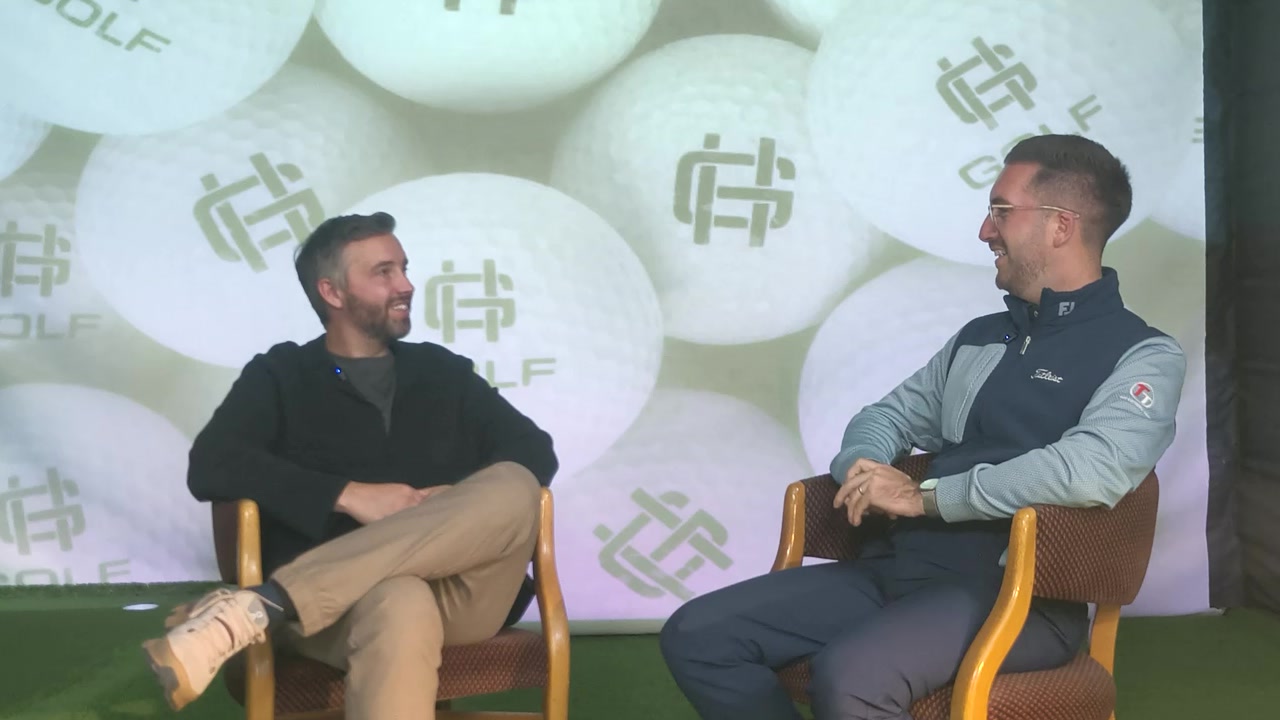
In the second session we picked a particular situation. It was the first tee at Brickendon, with members standing around watching. It goes quiet, it’s George’s turn and he takes the driver. I asked him to picture it and give the anxiety a number from zero to 100. He said 70. He joked that 100 would be doing it at The Open with the cameras on him.
We used a longer, eyes-closed hypnosis exercise to work with that scene. I wanted George to picture a situation he recognised and see whether he could relate to the feeling differently. Some of what he described as nerves could also feel like anticipation, the energy of getting a chance to hit a shot he wanted to hit. I asked him to see what that felt like for himself.
When I asked him to picture the scene again, he gave the anxiety a 20 and his excitement or anticipation a 100, on separate scales. Afterwards he said it had been difficult to picture at first. Bringing in bits of situations he remembered helped him get into it. He thought it had felt like a couple of minutes. I’d estimated we’d been doing it for close to 25.
Those were George’s own ratings while imagining the scene in the studio. At the start of the next session, when I brought up the same first tee again, his answer was roughly 50. I’m glad we asked again. The number at the end of an exercise can tell you something about that moment. To find out what carries over, you have to ask again later and eventually see what happens with a club in his hands.
There’s a study by Alison Wood Brooks that looked at treating pre-performance anxiety as excitement in tasks such as public speaking. It gives some context for the idea we were trying, while the task George and I cared about was a drive off the first tee. The bit I wanted him to explore was whether the feeling could be there and he could still be up for the shot. Read the study on reappraising pre-performance anxiety.
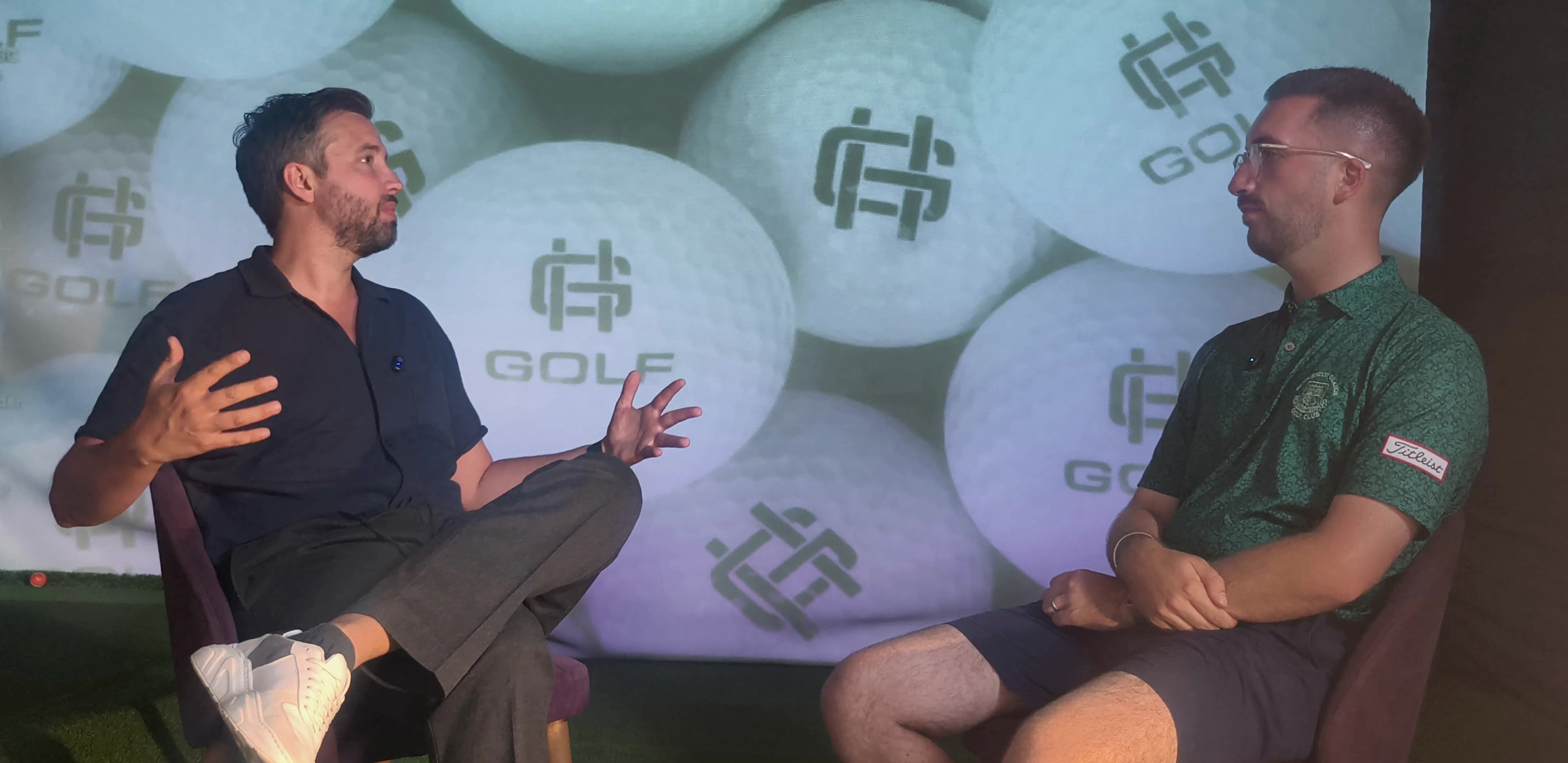
Watch Episode 2 from the first-tee exercise.
George told me about a good drive off an elevated tee at Royal Cromer. There was out of bounds down the right, trees left and the shot was into the wind. He knew the driver was the right club as with a more lofted club he expected to leave himself a much longer approach. He took it on and remembered being delighted when it came off. He also remembered his hands softening and being able to see the shot.
That was useful because it was his description of his own golf. If I ask someone to imagine being confident, they can end up trying to work out what I want them to feel. George could remember how it felt to see that shot and hit it. He’d also talked about finding a way to enjoy playing in pro-ams by thinking of it more like a day out playing golf. He’d already changed how he approached a pressure situation before. It was about reconnecting with that feeling.
This time we used an eyes-open exercise. I asked George to pick a point at the top of a club grip and keep his eyes there while he recalled the drive at Royal Cromer. Then we took that feeling into hitting shots in the simulator. We also borrowed from a club he trusted, his three-iron. He said he’d back himself to find the fairway with it even if there were a million pounds on the shot.
There were ordinary shots in that sequence too. On one, George said it simply hadn’t been a good swing which was a positive shift in how he saw a bad result with the driver. When I asked what it felt like to put it down to that, he said it felt great. He could deal with a swing that hadn’t come off and get on with the next one, it was not to do with him 'not being able to hit the driver'.
Watch the eyes-open exercise and simulator shots in Episode 3.
By the next session George had played in a competition and noticed a couple of poor shots with a fairway wood. He described the anxious energy coming back, his grip getting tighter and, in his view as a golf pro, his swing getting steeper. It was a helpful detail because it showed him where he might catch the pattern. A tight grip was something he could notice before the result told him how he’d played.
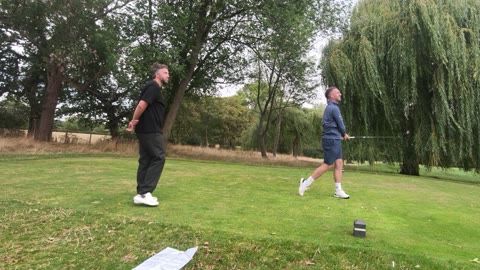
On the 16th at Brickendon, George talked me through his pre-shot routine. He picked a line in the distance and found a small point in front of him to help him aim when he walked in. He made a couple of rehearsal swings, took a last look and let his breath out. What we added was somewhere to put his attention if he felt himself tightening up. He could keep the line he wanted to hit in his mind when his eyes came back to the ball.
One drive came off, then came the swing where he felt the tension return. I asked where he was aiming. George picked out the edge of the tree again and kept that image in mind. The next drive had the little draw he was looking for. The following ones went very close to the same line. He described looking at the point, coming back to the ball and getting on with the swing before he had time to add more tension.
There’s research on what’s called an external focus of attention. One review across different movement tasks found an advantage to focusing on the effect you want the movement to have, compared with monitoring the movement of your body. George’s target line is an easy example of an outward cue you can try. Read the reviews on attentional focus and how reliable the effects are.
Watch the routine and on-course drives in Episode 4.
If you have a club you trust on the range and struggle to take on the course, I’m happy to talk through what happens for you. You can read about my golf hypnotherapy and mental game coaching or book a free 20-minute consultation. I’m based in St Albans and also work online.