By Peter Jacobs · The Brickendon golf case study, Part 3 of 3
Part 1
Part 2
When George Hewitt and I sat down to finish the Brickendon series, I asked him quite bluntly if he could hit his driver. His answer was that he would still be slightly nervous, “but I’m willing to give it a go now”. Before, he said, taking the club often felt out of the question. Now he was prepared to try it and, importantly, keep using it if he hit a bad one. His identity with the club had imrpoved dramatically.
He told me about one tournament where he reckoned he’d hit seven good drives from eight attempts which was a fantastic result. He also talked about a different round where he thought he’d hit about half of them well. That's fine, that's golf, that's life, our aim was never perfection, it was to correct his unfair believe that he couldn't hit the driver. Both rounds belong in the story as the better round tells you what he was capable of, whereas the mixed one tells you what he did when the driver gave him a reason to put it away again.
Part 1 explains how the driver became a problem for George. Part 2 follows the work from the studio onto the course. In the last phase of our sessions together, I wanted George to have something he could use in his own rounds, when the first tee felt awkward or he’d just hit a poor shot and had another decision to make.
In Episode 5, George asked me a question that’s probably familiar to anyone who’s tried to take a new idea out on the golf course. You go out with the best of intentions, stick to them for the first few holes, make a mistake and spend the next few holes in your own head. By the time you remember what you meant to practise, you’ve already played several shots. How do you get yourself back to neutral?
We talked about having a little action that marks when to pay attention and when to let it go again. George told a story about Ernie Els using the strap on his glove to go into and come out of his routine. What I liked about his example was how ordinary the action was. You already handle your glove and clubs on every hole. You can give one of those actions a job.
A pre-shot routine gives you a chance to start afresh. You can look at the lie, decide what the hole allows, pick a line and go through whatever helps you get ready to play. We also talked about the other end of it. Once you’ve seen where the ball went and taken anything useful from the shot, you can put the club back in the bag and let that be the point where you finish with it. If you’ve ever had a bad drive follow you all the way to the green, there’s something worth practising there.
I also asked George to imagine being on the second hole after playing the first in a club championship, with people watching, and telling someone how he’d got through it. I called that creating future memories in the video. It’s a way of making the rehearsal more specific. Where are you? What do you see? How do you want to go about it? We tried it with a drive in the simulator. For your own game, you can use the same idea to rehearse what you’ll do if the first shot is scrappy and you’ve got a bit of work to do.
Watch George’s question about concentration and resetting in Episode 5.
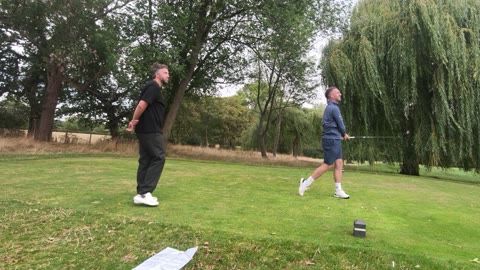
We took two situations out onto the course in Episode 6. The first was the tee shot with people watching, where I asked George what the worst part of a poor drive would be. He said it was going back to the bag for another ball which would make him feel awkward as he is the head pro, so there is always the expectation to hit it down the middle, or at least he felt they did. We talked about an occasion when he’d had to reload and how much it mattered to him afterwards. He could see that the moment would pass and still admit it got his heart racing.
That’s where acceptance came into our conversation. You can feel the nerves and still choose a shot you’re happy to play, the key is to accept that you might miss and give the swing a proper go anyway. This 'acceptance' can allow you to be little kinder on yourself and can limit anger building up.
We also looked at what happens on the way to the ball. George picked up on the idea of feeling his feet on the ground. He could see how it gave him something to pay attention to when he might otherwise spend the walk working out what he’d done wrong or worrying about the shot ahead. There’s time to work out how to play the next ball when you get to it. You can give yourself some of that walk back.
The second situation was the 16th with an imagined score of one under. George said he tended to get defensive with a good card going, particularly now that he played less often. He could remember being younger and knowing there’d be another round the following day. There was less sense that this was his one chance to put a score together. I asked him to recall how that felt and bring some of that freedom into the shot. He hit a drive we were both pleased with and said he’d like to find that feeling in his body more often.
There are good reasons to take a safer line. George is a percentage golfer and weighing up where a miss leaves you is part of playing well. You can still ask yourself why you’re making the decision. Are you leaving yourself a straightforward second shot, or have you started steering a swing you were quite happy to make earlier in the round?
Watch the first-tee and 16th-hole exercises in Episode 6.
I used to call myself the world’s worst putter, every time I missed a 50/50 putt I saw it as proof that 'I just can't putt'. George described something similar with his driver. He used to warn people he was playing with, particularly if he didn’t know them. After a poor one, he’d already got his explanation in.
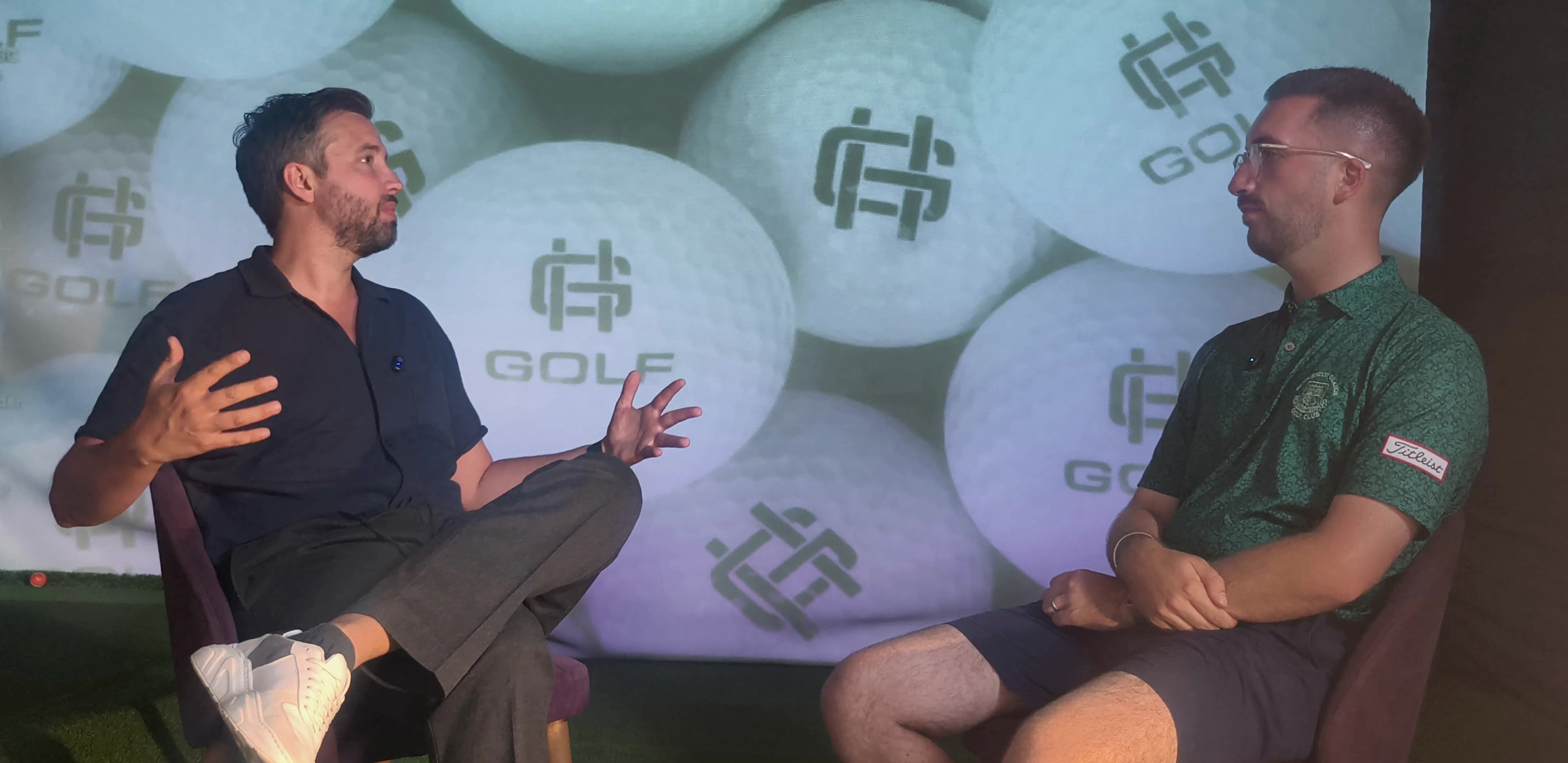
At the talk live talk at Brickendon, we spoke about spotting these beliefs so that can you take action to change them. George said after our work together he was catching himself more often and earlier, he found it helpful that we’d taken the work onto the golf course, where he could try it rather than just talk about it. He also described a day when he hadn’t driven it particularly well and still kept taking the club out of the bag, where as previously a couple of poor ones would have been enough to put it back in the bag.
We also talked about describing a shot factually. It went right. It started on line and came up short. I topped it. That gives you enough information to decide what to do next or spot patterns. This is a far more healthy and helpful way to look at your shots, this then allows you to make changes based on results and not opinions. I frequently come up short is a lot more useful to know than a emotional response such as, 'I am such a short hitter its a problem'.
Watch the live Brickendon talk here.
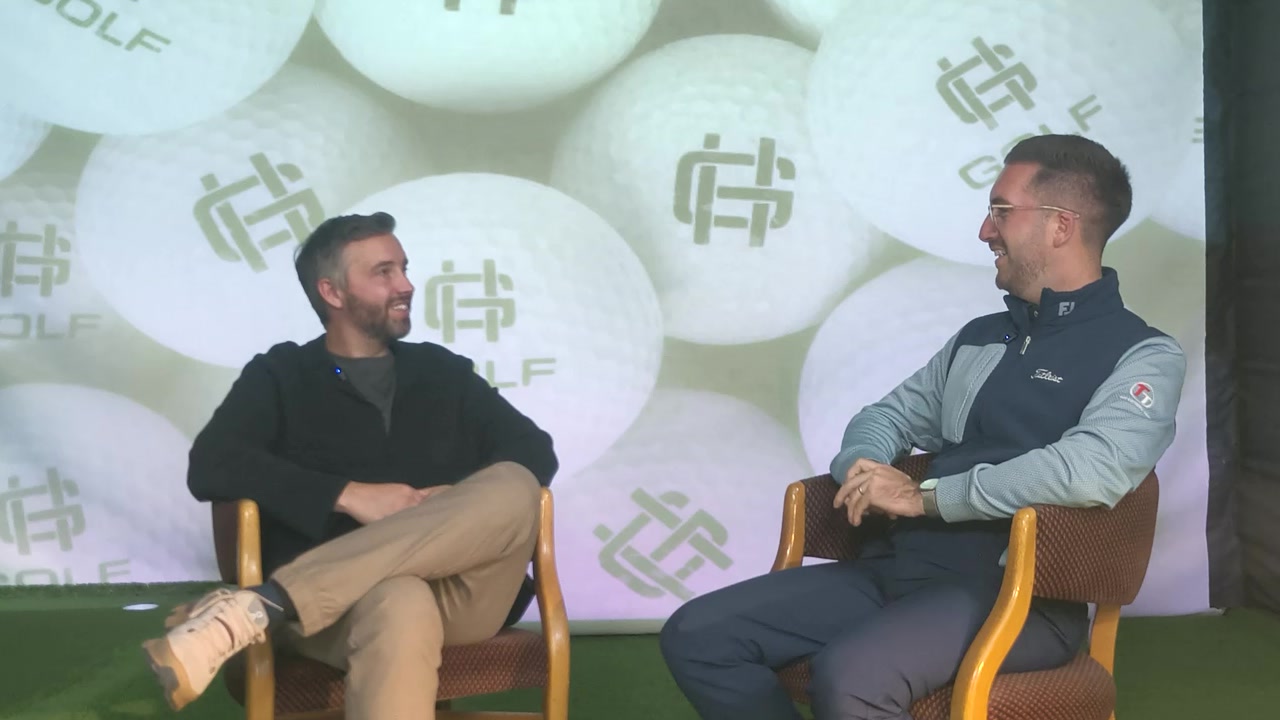
I asked George how he’d combine mental work with lessons on the swing. He said he used to think of golf as roughly 70 per cent swing and 30 per cent mind, and now thought of it as closer to half and half. The useful thing was hearing a coach who spends much of his time helping people with technique explain why he’d give more of his own practice time to how he approached a shot.
In the final conversation, George brought up a good example from his coaching. In a lesson you can drop a ball in a difficult patch of rough and enjoy working out how to get it somewhere useful. Hit your own ball into exactly the same spot during a round and you can arrive there thinking about how you’ve ruined the hole. The lie is the same, the shot is the same, it is just the noise in your head which is different.
When I asked what he’d take from the work, he talked about giving the mental side a proper go, having an end to his shot routine as well as a beginning, and finding a cue to help him reset. His description of the work was, “You’ve given me better skills to be able to go out and deal with situations.” When we spoke about hypnosis, he said it had felt strange at first and became easier once he gave himself a chance to get into it. In some sessions we used it, in others the work was mostly talking through what happened and trying things with a club in his hands.
It was a pleasure working with George, he is knowledgeable, skilful, an extremely good golfer and an even nicer guy.
If there’s a shot you keep thinking about long before you reach it, or one you’re still thinking about two holes later, I’m happy to talk through it with you. You can read about my golf hypnotherapy and mental game coaching or book a free 20-minute consultation. I work in St Albans and online.